Oops! Something went wrong while submitting the form.
By clicking "Accept", you agree to the storing of cookies on your device to enhance site navigation, analyze site usage, and assist in our marketing efforts. View our Privacy Policy for more information.
Article
·
April 9, 2026
The Hidden Cost of Automation Failure in Food & Beverage and Consumer Product Manufacturing
Haumiller Team
Most automation systems don’t fail all at once. They lose performance over time, and that’s where the real cost shows up.
In food and consumer product manufacturing, production rarely stops because of one major issue. More often, it’s a series of smaller problems that build over time. Output is still there. The line is still running. But things are not as consistent as they should be.
That gap between running and running well is where costs start to add up.
The Problem Isn’t Always Obvious
From a high level, the system looks like it is doing its job, but on the floor, it’s a different story:
Operators stepping in more than expected
Short stoppages throughout the shift
Output that fluctuates instead of holding steady
Scrap that is higher than it should be
None of these issues are big enough on their own to shut production down, but in a high-volume environment, they do not need to be. They build over time and start to affect overall performance.
Why It Stays That Way
In many facilities, this becomes the normal way of operating- teams adjust, workarounds get built in, expectations shift.
Not because it is ideal, but because changing it feels like a bigger risk.
Replacing or upgrading automation impacts production schedules, internal resources, and overall operations. So even when a system is not performing the way it should, it often stays in place longer than it should.
The line keeps running, buttThe issues stay in the background.
At Scale, Small Issues Add Up
In food and consumer product manufacturing, volume changes everything.
A small drop in efficiency across thousands or millions of cycles becomes significant- inconsistent output affects throughput, scrap increases material costs, or frequent interruptions reduce overall productivity.
Individually, these may not stand out. Over time, they become part of the cost of running the line.
Where These Problems Start
Most of these issues do not start during production. They start in how the system was designed.
If part handling is not fully controlled, variation shows up. If timing is not consistent, output will not be either. If inspection is treated as a separate step, quality becomes reactive instead of built into the process.
At higher speeds, there is less room for error. Systems need to hold performance, not just reach it.
Rethinking What “Working” Means
A system that runs is not necessarily performing the way it should.
In high-volume production environments, consistency is the standard:
Stable output across every cycle
Minimal operator involvement
Predictable performance over time
Anything less creates friction, whether it is obvious or not.
A Different Approach
The difference is not just in speed or technology, it is in how the system is engineered from the start.
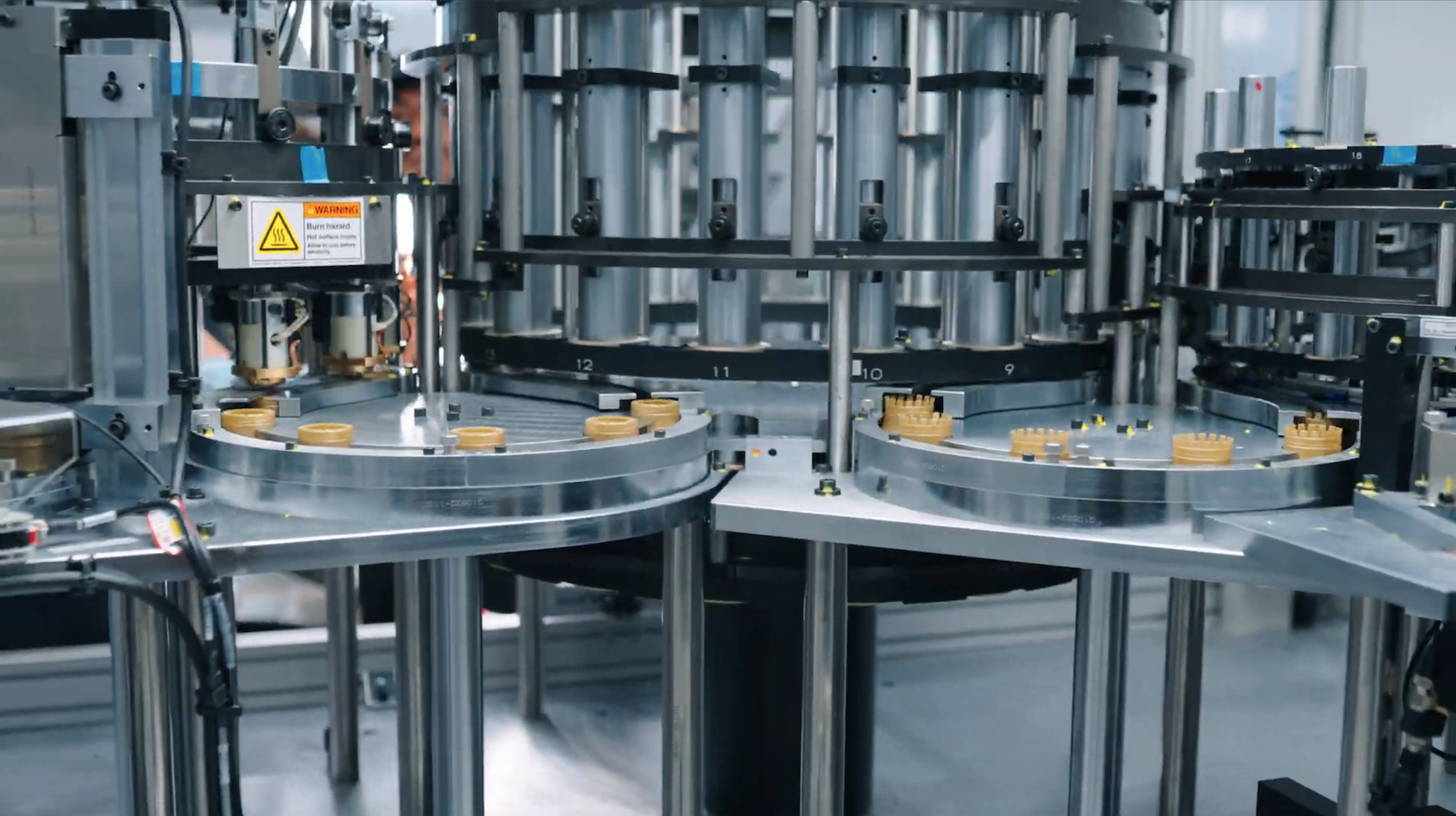
Haumiller designs custom assembly systems for high-volume production environments where performance needs to hold over time. That includes:
Controlled part handling
Integrated inspection within the process
System design built around long-term operation
Because in food and consumer product manufacturing, the goal is not just to get a system running, it is to keep it performing consistently.
Final Thought
If your system needs constant attention to maintain output, if performance varies from shift to shift, or if inefficiencies have become part of the process, it is worth taking a closer look at why.
.png)