Oops! Something went wrong while submitting the form.
By clicking "Accept", you agree to the storing of cookies on your device to enhance site navigation, analyze site usage, and assist in our marketing efforts. View our Privacy Policy for more information.
Article
·
March 20, 2026
When Your Automation Partner Stops Delivering: What Pharma OEMs Need from Their Next Machine
Haumiller Team
Engineering Experts
If you lead engineering or manufacturing for a pharmaceutical or medical device OEM, automation isn’t a flashy capital purchase. It’s a risk decision. Most teams don’t reach out to Haumiller because everything is going well. They come because they’re frustrated. Their current machine isn’t performing like it should, quality issues keep piling up, or support from their last vendor didn’t hold up under pressure. They’re not looking for speed. They’re looking for something they can rely on.
Validation Issues Usually Start in Design
Most automation projects don’t fail mechanically. They fall apart during qualification. That’s when documentation gaps show up, requirements feel ambiguous, and inspection logic becomes hard to justify. Things that seemed minor in design start causing major delays.
Experienced teams know validation starts before a single part is built. Haumiller begins that work early. Requirements traceability is part of the initial system design. Controls logic is written with audits in mind. Repeatability isn’t left to chance or operator instinct. It’s built in on purpose. That’s what keeps qualification from turning into a fire drill.
Reliability Protects Everything
In regulated environments, unpredictability isn’t just annoying. It creates scrap, rework, delays, and investigation backlogs. A system that runs fast but breaks down every week costs more than one that runs a little slower but doesn’t require babysitting.
Haumiller focuses on reliability from the start. Process windows are engineered to be robust, not finicky. In-process checks are deliberate. Maintenance plans are built before launch, not after performance drops off. Spare parts planning happens up front. It’s not about being the fastest. It’s about being the system that keeps running.
Inspection Can Either Reduce Risk or Multiply It
Inspection is critical in medical device assembly, especially for injectors and wearables. But if the thresholds are too tight, the lighting isn't consistent, or the fixturing introduces variation, inspection becomes a constant headache instead of a safeguard.
Haumiller helps define what actually matters for patient safety. Cosmetic issues aren’t treated like critical defects. Vision systems are tuned with stability in mind, not constant manual tweaking. Inspection is there to prevent problems, not create new ones.
Data Integrity Is an Engineering Discipline
Traceability and audit trails don’t get added at the end. They’re engineered into the system. If a machine doesn’t clearly show what happened and when, the investigation will take too long and the audit will go badly.
Haumiller helps teams define which data actually matters, where it’s stored, and how changes get tracked. Override logic is clear. Integration with MES and QMS systems is planned for, not patched together after the fact.
Cleanroom Environments Demand Discipline
Cleanroom compatibility isn’t just about using the right materials. It affects how the machine is serviced, lubricated, and operated. If the build process isn’t structured, the machine won’t pass review. If the supplier isn’t familiar with cleanroom expectations, the problems will show up fast.
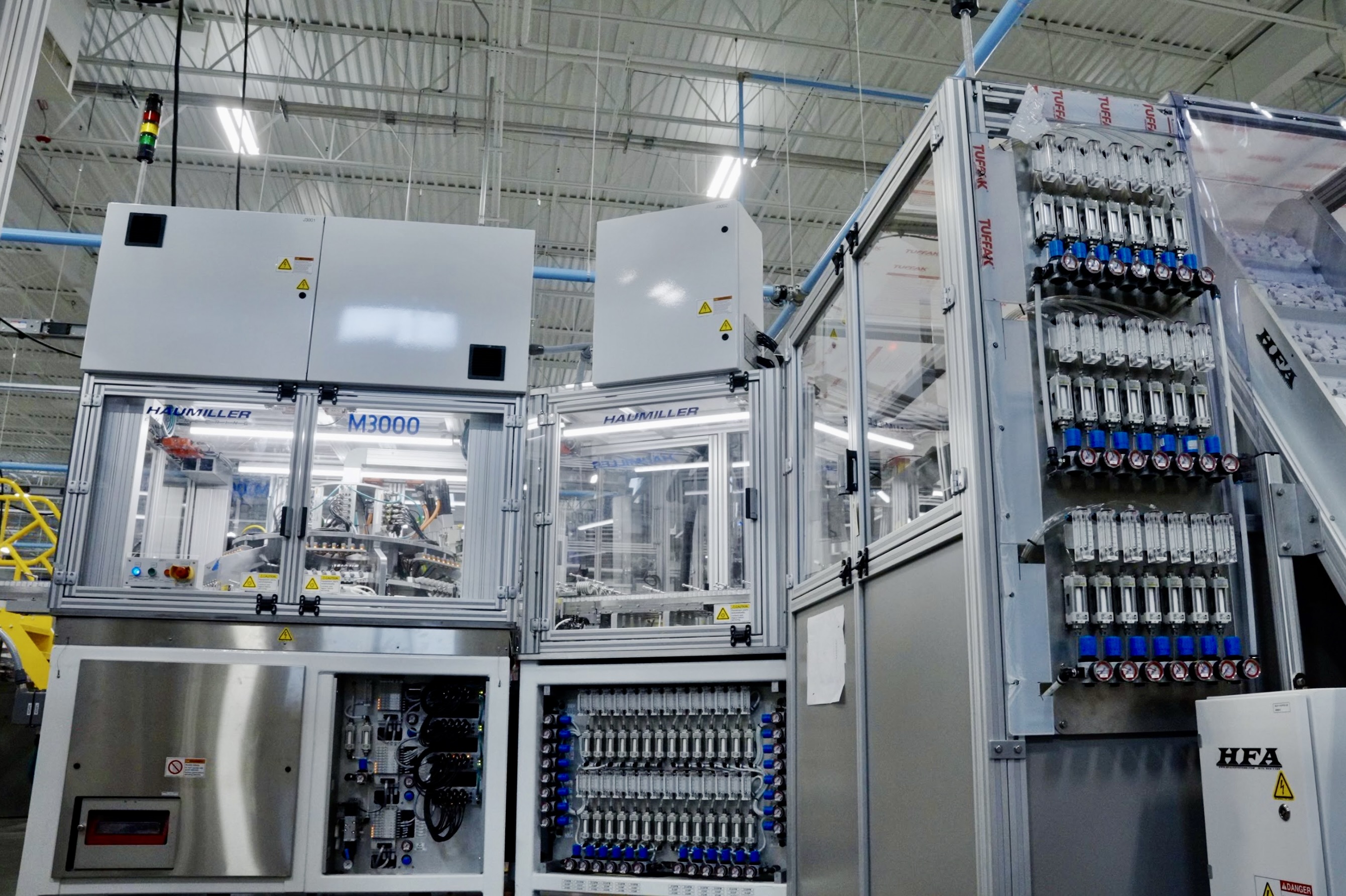
Haumiller builds and tests systems in-house. That makes it easier to manage cleanliness, consistency, and documentation. Teams know what they’re getting before the machine shows up onsite.
Long Product Lifecycles Reveal Weak Foundations
Regulated products don’t get built and forgotten. They run for years, through supplier changes, product revisions, and quality updates. If the machine’s documentation isn’t clear and its architecture isn’t flexible, every small change becomes a major headache.
Haumiller structures every engagement to cover more than just the build. Maintenance, training, spare parts, and support plans are built in early. Because issues shouldn’t catch anyone off guard three years down the road.
A Practical Way to Evaluate Automation Partners
If you’re evaluating automation suppliers, don’t get distracted by the flash. Focus on the things that cause pain later.
Ask when validation planning begins.
Ask how inspection drift is managed.
Ask what documentation exists before build is complete.
Ask what support looks like at launch.
Ask how long spare parts are available.
Ask how the team will help during IQ/OQ/PQ.
The answers will tell you if they’re a short-term vendor or a long-term partner.
Where Haumiller Fits
Haumiller supports pharmaceutical and medical device teams that are tired of fighting fires. The goal isn’t a machine that looks good during a demo. It’s one that passes validation without panic, holds up under audit, and runs the way it’s supposed to, day after day. That’s what matters when your name is on the product.
.png)